1905 to 1972
He taught that imagination is God, and he meant it literally.
Thirty-four years of lectures on one idea, held without wavering, and refined until it cost him the audience that had come for something easier.
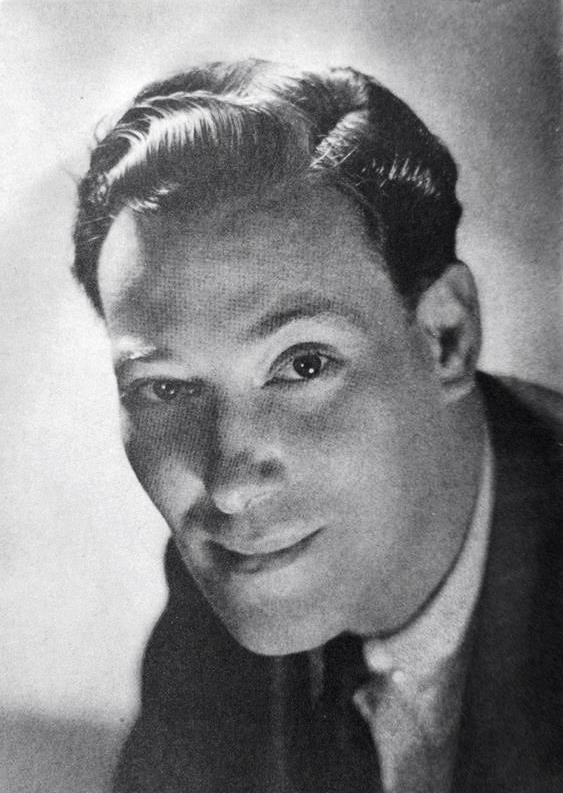
Neville Lancelot Goddard was born on 19 February 1905 in St Michael, Barbados, into a large Anglican family of modest means. At seventeen he sailed for New York to study theatre, and made a career of it. He danced professionally, appeared on Broadway, and toured America and England. It gave him two things he used for the rest of his life: a trained instrument of a voice, and a bodily understanding of stillness that runs right through his teaching.
Around 1931 he met the teacher he named in lectures for the rest of his life, a turbaned black rabbi he called Abdullah. They studied together for about five years, he said, in Hebrew, in scripture, and in what he loosely called Kabbalah. The habit of reading every biblical figure as a state of consciousness rather than a historical person is not something he arrived at alone.
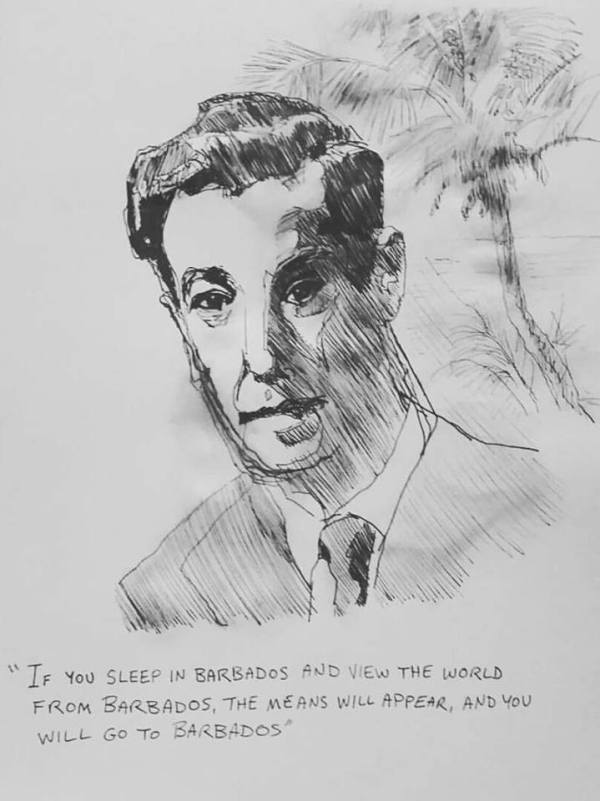
The story he told most often is small and domestic. In the winter of 1933 he was twenty-eight, broke, and wanted to spend Christmas with his family in Barbados. Abdullah’s instruction was to stop wanting it and start occupying it: to sleep in New York as though he were sleeping in Barbados. Before the last ship of the year sailed, a brother he had not heard from in a long time wrote to him, enclosing fifty dollars and a ticket.
He began publishing in 1939 with At Your Command, and published under one name only. Not Goddard. Just Neville.
1943
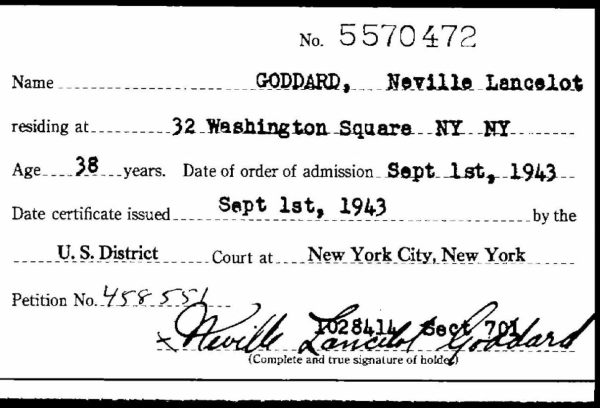
He was drafted on 12 November 1942 and discharged four months later, in March 1943, to take up employment in an essential wartime industry. The essential industry turned out to be lecturing on metaphysics in Greenwich Village. On 1 September he was admitted to United States citizenship, aged thirty-eight, giving his address as 32 Washington Square. Ten days later The New Yorker found him back at the lectern.

Los Angeles
He moved west and found his audience. Through the nineteen fifties he lectured to full rooms in Los Angeles and had his own series on KTTV. He was, by every surviving account, a superb speaker: precise, unhurried, and entirely unbothered by how strange the thing he was saying was.
He was also generous with the material in a way that is the only reason this archive can exist. He built no course and sold no certification. He told people to record him and pass the tapes around, and they did, in their thousands.
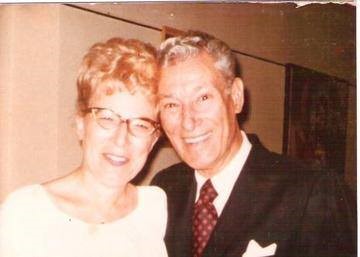
1959, and what it cost him
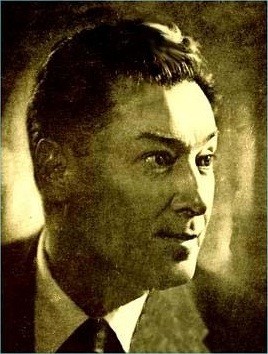
In 1959 he reported a mystical experience, a rebirth in which he came out of his own skull as an infant, and built the last thirteen years of his teaching on it. He called it the Promise, and set it against what he had taught until then, which he called the Law.
The Law is the part everyone still wants: assume the feeling of the wish fulfilled and the world rearranges. The Promise is the part almost nobody wanted: that the wish-fulfilling is the apprenticeship, that every person is Christ waiting to be born, and that the whole apparatus of getting what you want is scaffolding to be dismantled once you can stand without it.
It cost him. Audiences had come for the house and the car, and he had started telling them those were beside the point. His speaking agent warned he would have no audience left. He said he would tell it to the bare walls.
He died of heart failure at his West Hollywood home on 1 October 1972, marked by a short notice in the Los Angeles Times and a hurried memorial.
Afterwards
He was nearly lost. Wikipedia deleted his article in 2016 on the grounds that he was not notable enough to keep. What saved him is the thing he did deliberately in his lifetime: he let the recordings go. Tapes became files, files became uploads, and a man who died to a four-inch obituary now reaches more people in a week than attended his lectures in a decade.
Which is the irony worth leaving on. The half he was warned to drop is the half that survived, and the half he cared about is the one still waiting to be read. It is all here.